


HITL is an oversight and approval platform for AI agents and automated systems. It allows organizations to introduce human decision points into AI-driven workflows, giving AI room to operate while keeping people in control when consequential decisions arise. I led product design across the full platform.
Role
Product Designer
Year
2025–2026
Industry
AI / Enterprise Software
Award
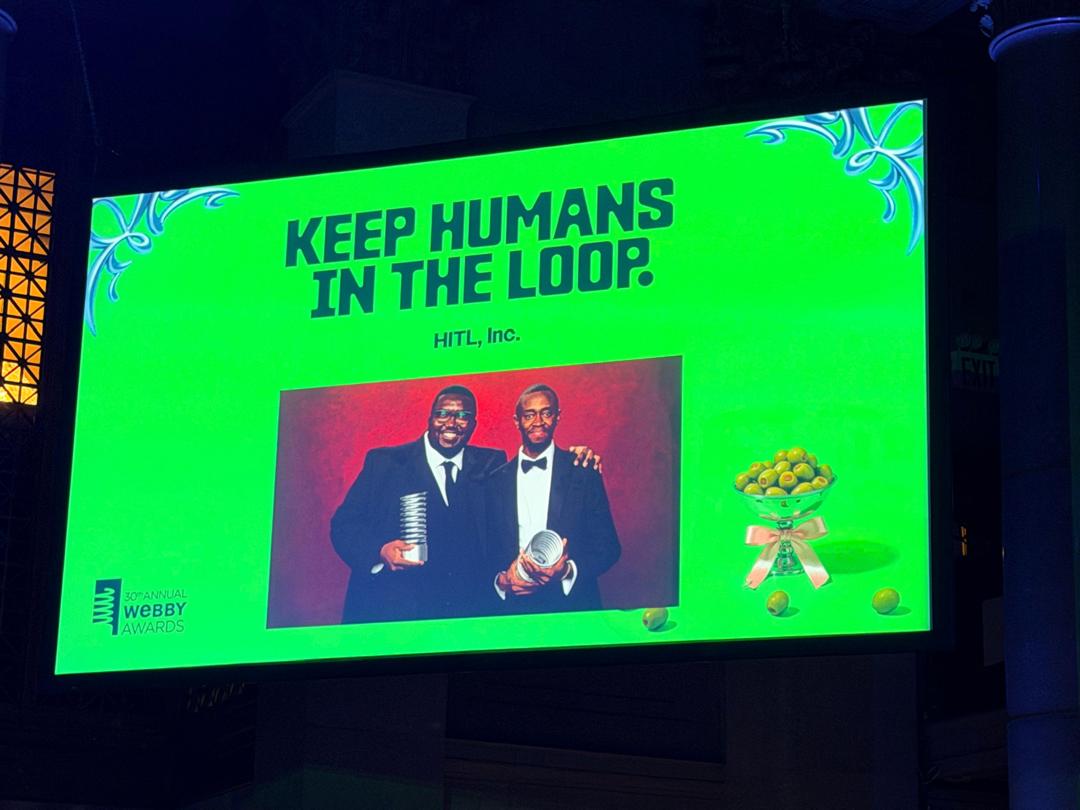
Webby Award Winner
From Answers to Actions
AI is no longer only answering questions. It's starting to take actions.
Traditional AI interaction follows a simple loop: a human asks, the AI responds, and the human decides what happens next. Agentic AI changes this. Given a goal, an AI agent can reason, decide, and act: potentially sending information, updating records, communicating externally, triggering other systems, or initiating a business process.
As AI becomes more capable of acting, an important question emerges: which decisions should AI make independently, and which should return to a human? Organizations need a way to define that boundary. That is where HITL comes in.


Give AI Autonomy. Keep Humans in Control.
The goal is not to put humans in front of every AI action. That would defeat the purpose of automation. Instead, HITL allows routine actions to remain autonomous while consequential actions return to a human.
This balance between autonomy and human judgment is the central Product Design problem. Human attention is a limited resource. It should be used where judgment creates the most value, not spread across decisions that don't require it.
The basic loop is: an AI agent reaches an action that is consequential, sensitive, or risky: HITL pauses the workflow, creates an approval request, surfaces the right context to the right person, collects their decision, and returns it to the system. The workflow then continues, changes direction, or stops.
Designing the Approval Experience
The deeper design question isn't "how do we design an approval screen?" It's: how do we design the relationship between machine autonomy and human judgment?
When an AI agent asks someone for approval, that person should not have to investigate several different systems to understand what is happening. The experience must answer six things without the reviewer having to go looking for them:
What is the AI trying to do? Why was this sent to me? Context: what do I need to know? Risk: what could happen if this proceeds? Decision: what choices do I have? Outcome: what happens after I decide?
Placing an Approve button in front of someone does not make an AI system trustworthy. Approval without context isn't oversight. The interface has to make AI actions understandable, not just interruptible.
Closing the Loop
The human decision isn't the end of the interaction. The decision must return to the automated system. This is what makes the human truly in the loop. They aren't reviewing what happened after the fact. Their decision becomes part of the execution path itself.
Design decisions around speed were just as important as decisions around clarity. Human oversight creates additional control, but poorly designed approvals become a bottleneck. The goal was to bring the decision to the human rather than making the human chase the decision, through web and mobile experiences that surface the right request at the right moment with enough context to act quickly.
One Approval Was Only the Beginning
The original HITL interaction, AI → Human → Approve / Reject → AI, is a clean model for a single consequential decision. But real organizational decisions are rarely that simple.
One person may not have the authority or information required to make the final call. A process may need to move between AI agents, employees, managers, security teams, compliance teams, and multiple levels of approval, branching based on conditions, escalating based on risk, returning to an earlier stage, before reaching a final outcome.
This led us to a much bigger Product Design problem: how do you design a system where organizations can define and manage the entire decision journey between humans and AI, not just a single point of approval?
Designing Complex Workflows
We're currently designing a system that allows organizations to build multi-stage, non-linear human-in-the-loop workflows. A workflow can branch based on conditions, require approvals from several different people or teams, escalate based on risk level, loop back to an earlier stage, involve multiple AI agents, and take different paths depending on decisions already made, eventually arriving at a final approved or rejected destination.
This moves HITL well beyond individual approval requests. The Product Design challenge is no longer "how does one person understand one AI decision?" It becomes: how does someone understand where they are in a process, how the request arrived, who has already reviewed it, what decisions have already been made, and what happens after their decision?
Designing for that level of organizational complexity, where decisions travel through AI agents, people, policies, conditions, and multiple levels of authority, is a fundamentally different problem from designing a single approval card.
Design · Deploy · Monitor · Audit
The broader enterprise vision for HITL is organized around four capabilities. Design: organizations visually define how humans and AI should work together, where machines can act, where humans must intervene, who makes decisions, and how decisions escalate. Deploy: those workflows connect to AI agents, automations, and business systems.
Monitor: teams understand what workflows are running, where decisions are waiting, which humans need to act, and where processes are blocked. Audit: organizations can trace the history behind any outcome: what the AI attempted, why human intervention was required, who reviewed it, what they decided, and what the final result was.
That last point matters. Human oversight should leave a trace. An audit trail isn't an afterthought. In a well-designed human-AI decision system, it's one of the core product values.
Outcome
HITL creates an interaction layer between autonomous systems and human judgment, allowing AI to move quickly while keeping people in control of decisions where consequences matter. It won the Webby Award for Best Responsible AI Implementation, recognizing that human oversight and AI efficiency are not mutually exclusive.
We're now moving from designing individual approval moments to designing entire decision journeys that can move between AI agents, people, teams, conditions, and multiple levels of authority. The next challenge is building a system where organizations can govern the relationship between humans and AI across complex, non-linear processes.
Working on HITL changed how I think about AI Product Design. As AI moves from answering questions to taking actions, designing the interface is only part of the problem. We also have to design permissions, judgment, escalation, intervention, accountability, and the moments where control should return to a human. As the product evolves, that challenge becomes more interesting. We're no longer designing a single approval interaction, but entire systems for how humans and AI make decisions together.