


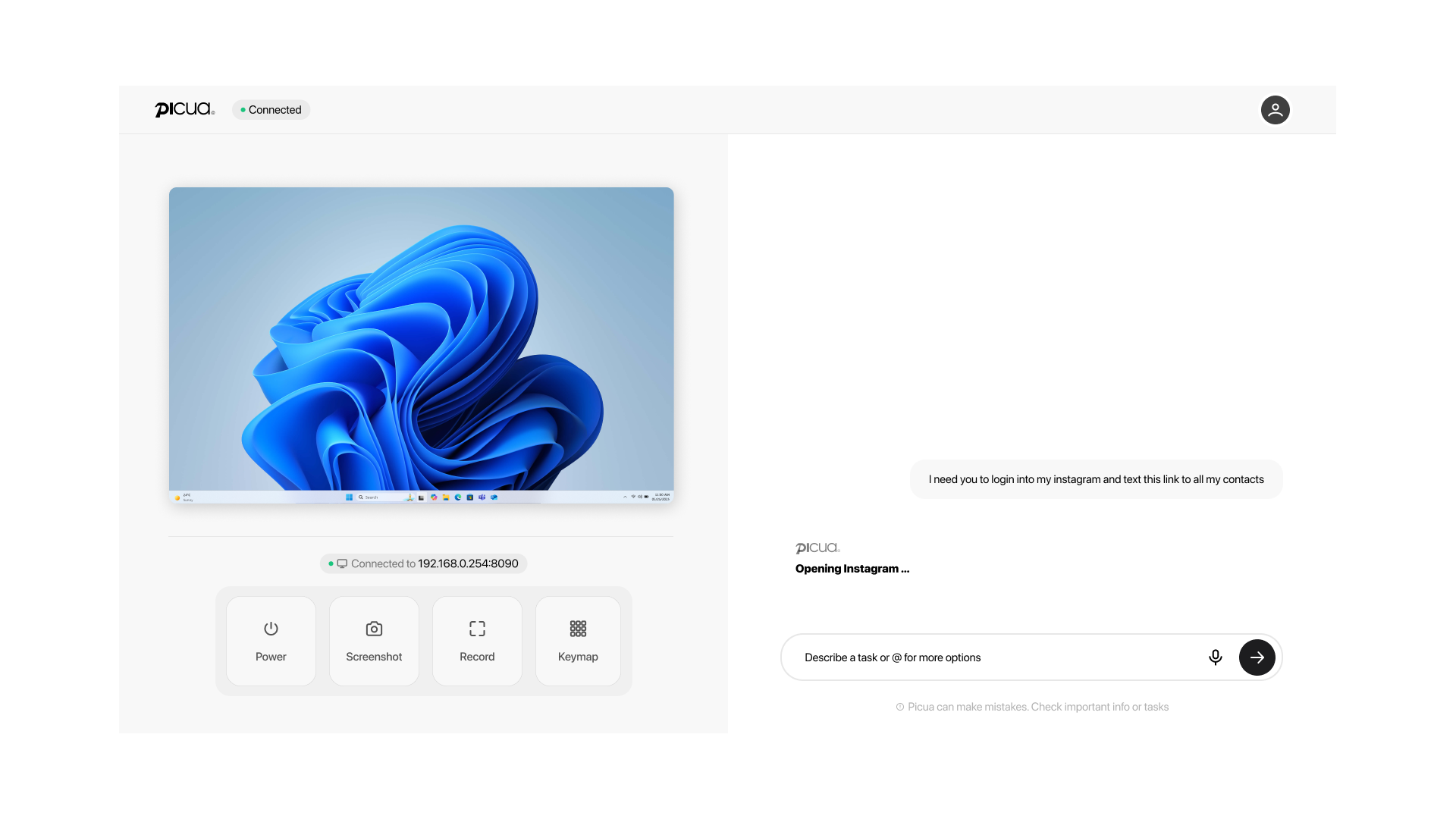
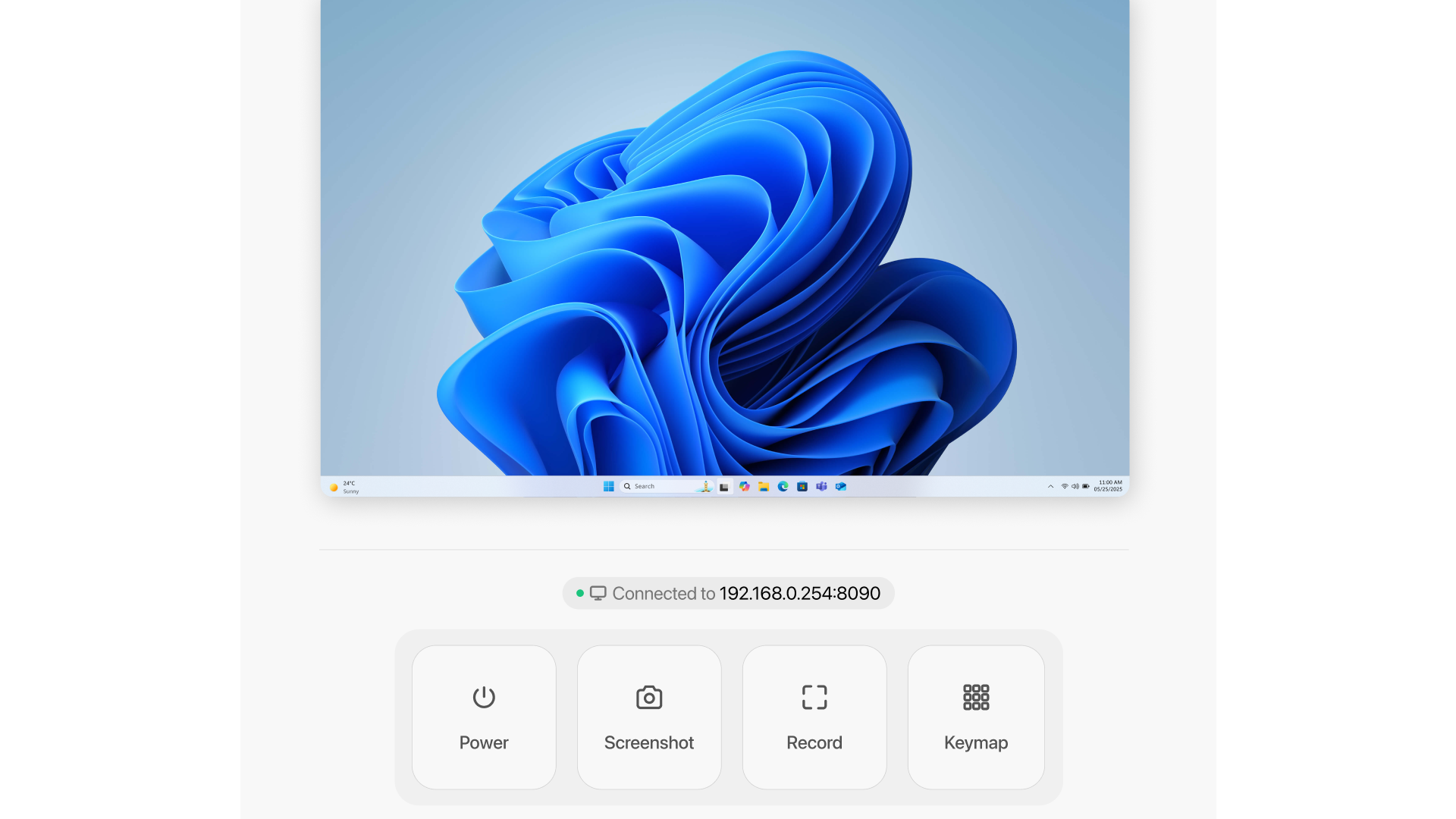
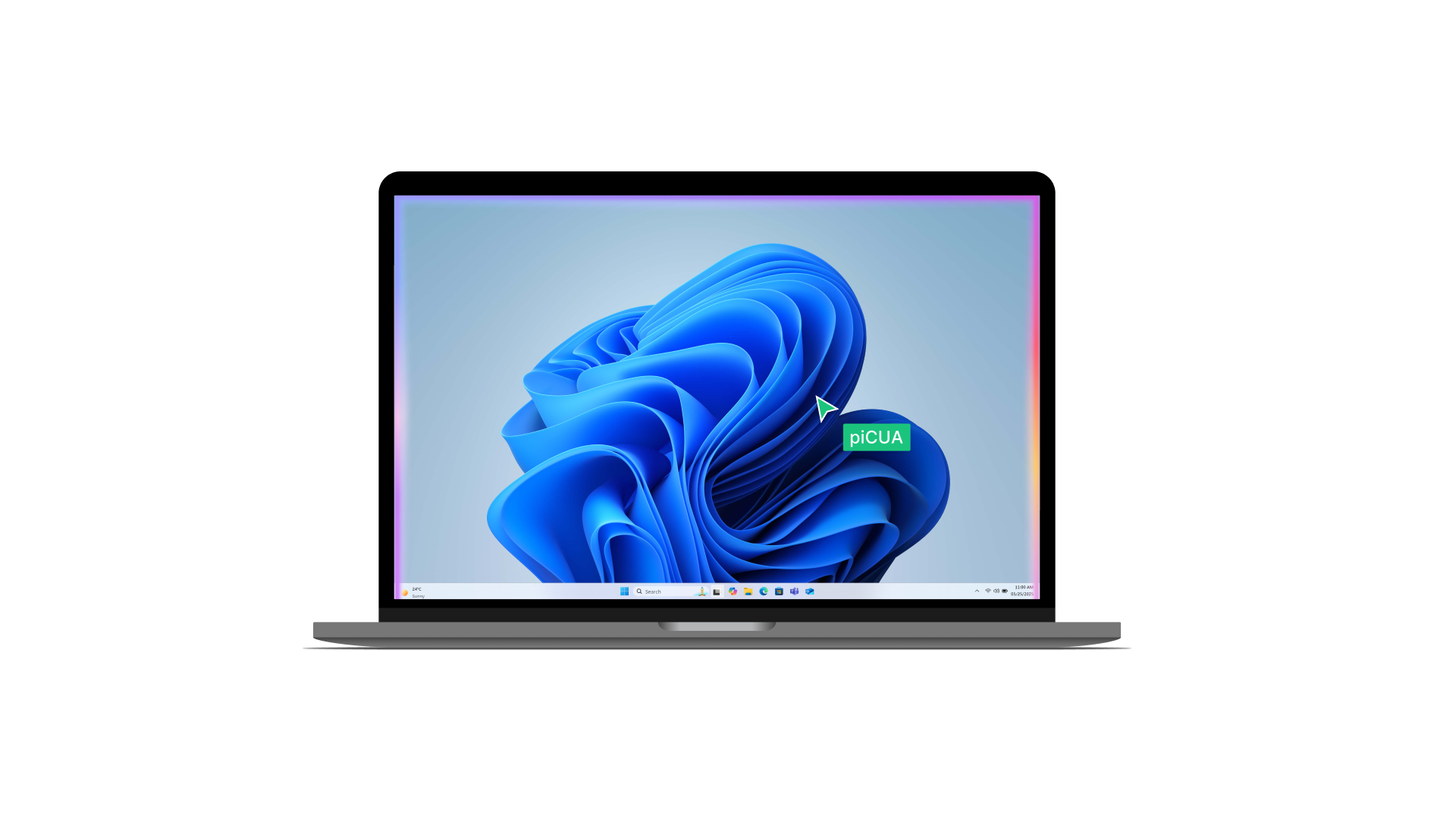
Picua is an AI computer use platform that enables AI agents to interact with desktop applications, including browsing, form-filling, and data extraction, autonomously. I led product design, creating a UI that keeps users informed and in control.
Role
Lead Product Designer
Year
2024
Industry
AI / Automation
Platform
Web App
Challenge
When AI takes actions on your computer, users need to feel in control even when they're not doing the work.
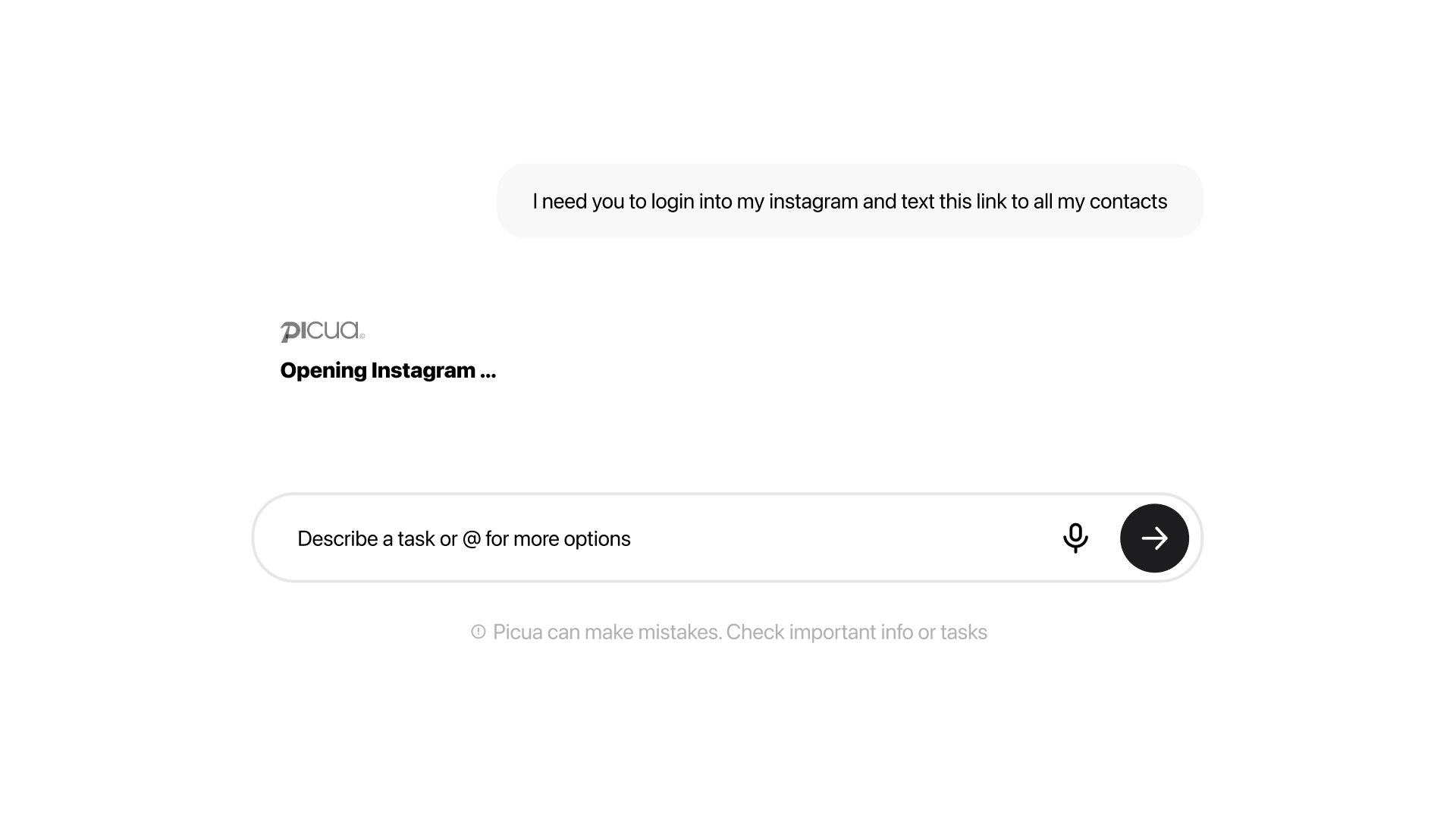
The challenge was clear feedback loops showing what the AI is doing and why. Making it easy to intervene at any point was equally important. Getting this wrong means users either distrust the system entirely or blindly over-delegate, both of which are dangerous.
Approach
I mapped the full arc of an AI-assisted task, from instruction input through active execution to completion, identifying every moment where users needed visibility or control.
This informed a live task feed showing AI actions in real time, a step-by-step audit trail, and a clear intervention mechanism. Visual design leaned on calm, structured layouts to counteract the inherent unpredictability of AI behaviour.
Outcome
The product shipped with high user confidence scores. Participants consistently described feeling in control despite the AI operating autonomously, a direct result of transparency-first design. The task feed and audit trail became defining product features.
Beyond Computer Use
What if robots could work with the systems we already have?
Our ongoing work extends PiCUA beyond software agents. We're developing a framework for how robots can interact with digital and legacy systems, exploring how embodied AI can understand, operate, and navigate technology that was never designed for autonomous machines.
A significant amount of real-world infrastructure still depends on older computer systems. Rebuilding every machine, interface, and piece of software isn't always practical. At the same time, robotics and embodied AI are becoming increasingly capable. The question we're investigating is whether we can teach robots to work with systems that already exist, rather than requiring those systems to be rebuilt first.
The interaction model this opens up is:
Human → AI Agent → Robot → Digital or Legacy System → Task Completed
From a design perspective, this introduces questions that go well beyond a traditional interface. When an AI can act across both physical and digital environments, the designer is no longer thinking only about human–screen interaction. Intent, awareness, control, trust, state, and failure all take on new dimensions when the system has a physical presence and can encounter things the AI didn't expect.
This is the direction PiCUA is moving toward, and it's where the most interesting design problems are.